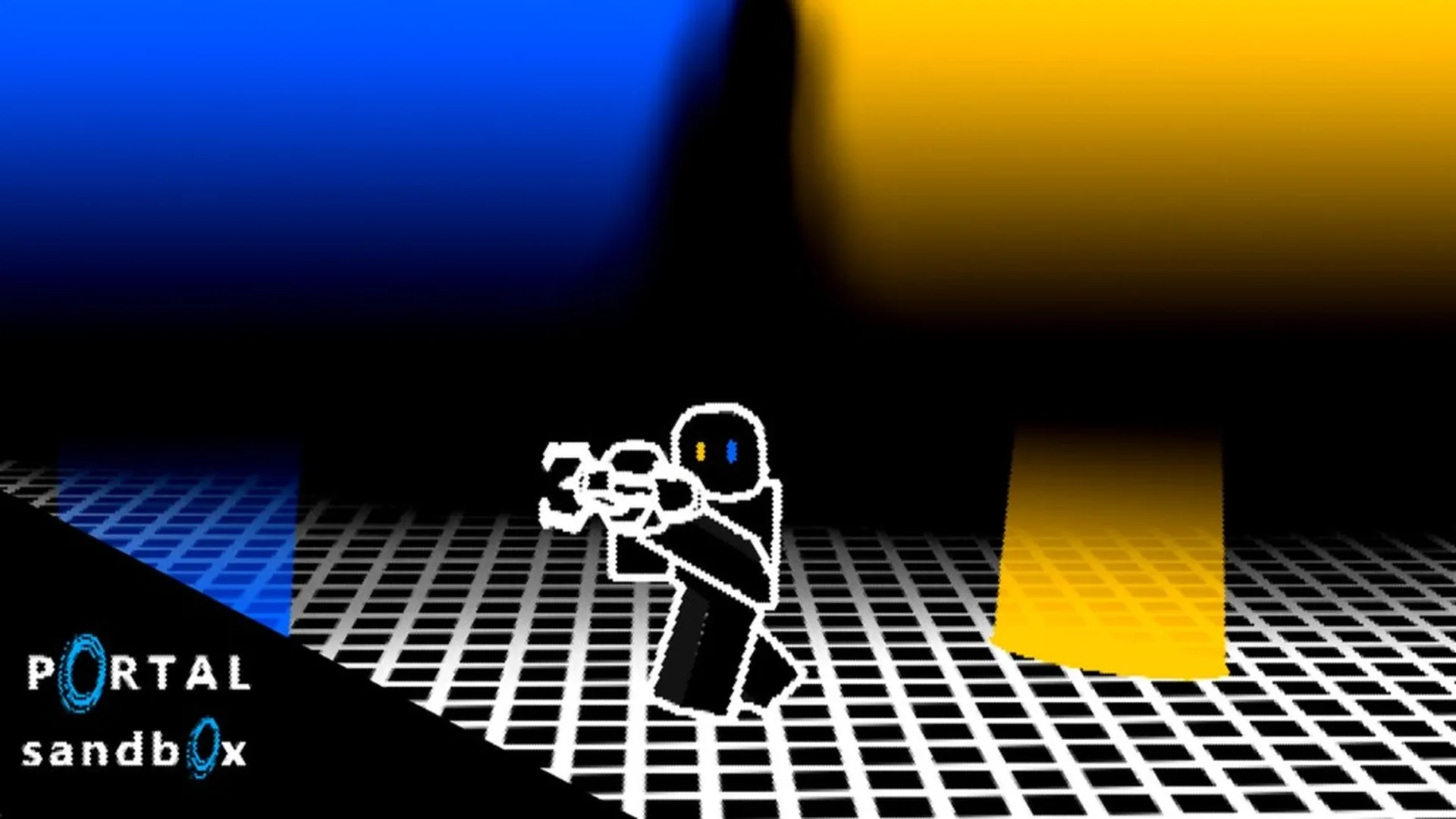
- Portal Sandbox best mods currently means creative setups and custom experiments, not verified downloadable modifications.
- Portal gun routes are the core way to change movement, object delivery, and obstacle-course layouts.
- Private servers are useful for repeatable builds, solo testing, and friend-only experiments.
- Best setup choice depends on whether you want traversal, physics testing, construction, or cooperative play.
- Official checks should come first before trusting third-party scripts, plugins, or unrelated Roblox codes.
What “Best Mods” Means in Portal Sandbox
Portal Sandbox best mods are not currently documented as a confirmed mod marketplace, plugin library, or downloadable modification system. The practical alternative is to create mod-style custom setups inside the Roblox experience using the portal gun, compatible surfaces, movable objects, private sessions, and repeatable challenge layouts.
This distinction matters because third-party pages may use “mods” as a general search term for custom content. A reliable Portal Sandbox guide should not present unofficial scripts or files as official features. Instead, treat a mod-style setup as a player-created experiment that changes how the sandbox is used without claiming that the game supports external modification tools.
The official Portal Sandbox Roblox experience page is the best starting point for checking the live experience. The page can change as the developer adds testing systems, building options, or new mechanics.
| Setup Type | What It Changes | Best For | Difficulty |
|---|---|---|---|
| Traversal Course | Creates connected movement routes | Practice, obstacle challenges | Good |
| Physics Lab | Tests objects, height, and direction | Repeatable experiments | Advanced |
| Build Showcase | Arranges portals and landmarks | Creative construction | Moderate |
| Private Co-op Room | Reduces public-server interruptions | Friends and demonstrations | Beginner |
Do not assume that a file, script, injector, or third-party “mod menu” belongs to Portal Sandbox. Use the live Roblox experience and confirmed developer channels instead of downloading unverified tools.
Traversal Mod-Style Build
Create floor-to-wall routes, elevated exits, and checkpoint paths. This is the easiest way to make the sandbox feel like a custom movement challenge.
Physics Mod-Style Build
Use movable objects, different portal angles, and height changes to compare transfer behavior and landing positions.
Creative Mod-Style Build
Arrange landmarks, portal chambers, and object lanes to create a showcase scene or player-made obstacle area.
Best Portal Sandbox Setups to Try
The most useful custom setups begin with one clear goal. Avoid placing several portals randomly, because it becomes difficult to understand which change caused a different result. Start with two portals and one variable, then expand the layout after the basic route works.
A floor-to-wall route is the strongest beginner option. Place one portal on a nearby floor section and the second on a compatible wall or raised surface. Walk through the connection and observe the exit position. Once the route is stable, move the exit portal farther away or higher to create a longer traversal challenge.
An object delivery lane works well for players who want a physics-focused build. Position an interactable object near the entry portal and mark a destination area near the exit. Push or move the object through the connection, then change the exit orientation and compare the result.
A checkpoint course adds structure to an open sandbox. Use visible landmarks as checkpoints and create a route that links them together. The challenge can require players to reach each checkpoint without replacing a portal, or it can allow one portal adjustment at each stage.
| Build Idea | Initial Layout | Challenge Rule | Useful Variation |
|---|---|---|---|
| Floor-to-Wall Route | One floor portal, one wall portal | Complete the route without moving portals | Raise the exit or extend the distance |
| Portal Checkpoint Course | Several landmarks connected by routes | Reach each checkpoint in order | Allow only one portal replacement per stage |
| Object Delivery Lane | Entry portal beside an object | Finish the object in a marked destination | Change the exit angle or destination |
| Looping Observation Chamber | Connected viewpoints around one area | Test whether the route remains repeatable | Change height, direction, or camera position |
When testing a custom setup, change only the portal position, height, angle, or object location between attempts. This makes your results easier to compare and reproduce.
Choose a Single Objective
Decide whether the setup is for movement, object transfer, construction, or cooperative play. A clear objective prevents the layout from becoming unnecessarily complicated.
Mark the Starting Area
Pick a visible floor or wall section as the starting point. Keep the first experiment close enough that you can inspect the entry and exit without losing track of the route.
Place the First Portal
Aim the portal gun at a suitable surface and place the first portal. Flat, visible surfaces are easier to use when learning how portal placement affects movement.
Place the Second Portal
Choose a destination surface that creates a readable connection. Begin with a short route before testing height differences, longer distances, or object interactions.
Record and Expand the Result
Walk through the route, observe the exit position, and change one condition. If the result is useful, add checkpoints, objects, or another route to turn it into a custom challenge.
Physics Experiments That Feel Like Mods
Portal Sandbox is especially suited to experiments that imitate the feeling of a custom gameplay modification. These builds do not require claiming that external mods are installed. They simply use the sandbox tools to create unusual movement rules, object routes, and repeatable tests.
The first recommended experiment is object transfer. Place the entry portal beside a movable object and the exit portal in a clearly marked destination zone. Move the object through the connection, then repeat the attempt with a different exit orientation. Compare where the object appears and how its direction changes.
The second is a height and acceleration test. Use a lower entry position and an elevated exit surface with enough space around the landing area. Try different approach speeds and compare the resulting movement. The goal is not to promise one fixed result, but to understand how placement and approach affect the experiment.
A third option is a multi-portal route comparison. Build two possible routes between the same starting area and separate destinations. Test the first route, replace one portal, and test the second. This creates a practical comparison between travel distance, exit direction, and object behavior.
| Experiment | Required Items | Test Variable | Expected Observation |
|---|---|---|---|
| Object Transfer | Portal gun, object, two surfaces | Exit orientation | Object position and direction may change |
| Height Test | Low surface, elevated surface, landing area | Height and approach speed | Landing position can vary between attempts |
| Route Loop | Three or more compatible surfaces | Portal replacement | Travel path changes when one connection moves |
| Multi-Route Comparison | Several surfaces and destinations | Distance and exit angle | Routes can produce different movement outcomes |
Use a consistent starting position and record which portal was moved. Reproducible tests are more useful than complicated builds that cannot be rebuilt after a reset.
Physics Experiment Checklist:
- Choose one test objective before placing portals
- Use compatible and clearly visible surfaces
- Mark the starting point and destination
- Change only one variable between attempts
- Reset the layout before comparing a new route
Private Servers, Devices, and Safe Custom Play
Private servers are one of the most practical ways to create a mod-style Portal Sandbox session. They provide a separate space for solo testing, friend-only collaboration, creative construction, and repeated demonstrations. Public-server activity can interrupt a careful layout, so a private environment is useful when the setup depends on stable object positions or unchanged portal routes.
The Portal Sandbox private-server page should be checked for current availability and access details. Roblox experience features can change, so avoid promising a specific private-server price, duration, or configuration unless the live page confirms it.
| Platform | Strengths | Best Custom Setup | Considerations |
|---|---|---|---|
| PC | Precise aiming and flexible controls | Physics labs, detailed routes | Performance depends on hardware and connection |
| Console | Comfortable controller play and large-screen access | Co-op courses, showcase builds | Analog aiming may take more adjustment |
| Mobile | Portable access and short sessions | Basic portal tests, simple layouts | Small screens and touch input can limit precision |
Solo Testing
Use a private session to repeat the same portal arrangement without outside players changing the scene.
Friend Collaboration
Invite selected friends to test routes, compare solutions, or build a cooperative obstacle course.
Build Showcase
Prepare a clean layout, label destinations with landmarks, and demonstrate the route without public-server interruptions.
For precise portal placement and complex physics experiments, PC is generally the most convenient choice. Console and mobile remain useful for casual testing and cooperative play when the experience is available on those clients.
Updates, Codes, and Frequently Asked Questions
Portal Sandbox should be treated as a changing Roblox experience. Keep current feature notes separate from older tests, and check the official game page before assuming that a previously observed mechanic is still available.
There are no confirmed official Portal Sandbox redemption codes in the referenced official sources. Do not copy codes from other portal-themed Roblox experiences, and do not present general rewards or third-party promotions as verified Portal Sandbox content. For future announcements, check the official game page and the developer profile.
| Information Type | Current Guidance | Where to Verify |
|---|---|---|
| External Mods | No verified official mod library is listed | Official Roblox experience page |
| Custom Builds | Use portals, objects, surfaces, and landmarks | Live in-game testing |
| Private Servers | Useful for solo and friend-only experiments | Experience server page |
| Redemption Codes | No confirmed official codes are listed | Game page and developer profile |
| Feature Changes | Separate current mechanics from older tests | Game page and developer announcements |
There are no confirmed codes to list here. Avoid unrelated codes, unofficial executors, and downloads that claim to unlock Portal Sandbox features without a verifiable official source.
Q: Does Portal Sandbox have official downloadable mods?
The referenced official sources do not document a confirmed downloadable mod system or official mod library. The safest interpretation of “mods” is player-created portal layouts, physics experiments, and private-server challenges.
Q: What are the best Portal Sandbox mod-style setups?
Start with a floor-to-wall traversal route, an object delivery lane, a checkpoint course, or a height-and-acceleration physics test. These setups change the way you use the sandbox without requiring unverified external tools.
Q: Are there confirmed Portal Sandbox codes in 2026?
No confirmed official Portal Sandbox redemption codes are listed in the referenced official game page and developer information. Avoid codes copied from other portal-themed Roblox experiences.
Q: Which device is best for complex Portal Sandbox experiments?
PC is generally the most convenient for precise aiming, detailed portal placement, and complex physics setups. Console and mobile can still work well for simpler builds and cooperative sessions.